Eight Months After Completion, the Heater Stops Working. The Customer Calls. Nobody Remembers the Project.
WFP keeps every completed project alive in a dedicated Warranty phase, with equipment registries, claim tracking, and a resolution workflow that protects your reputation and your referrals.
Project Completion Is Not the End of the Project. It's the Start of the Reputation.
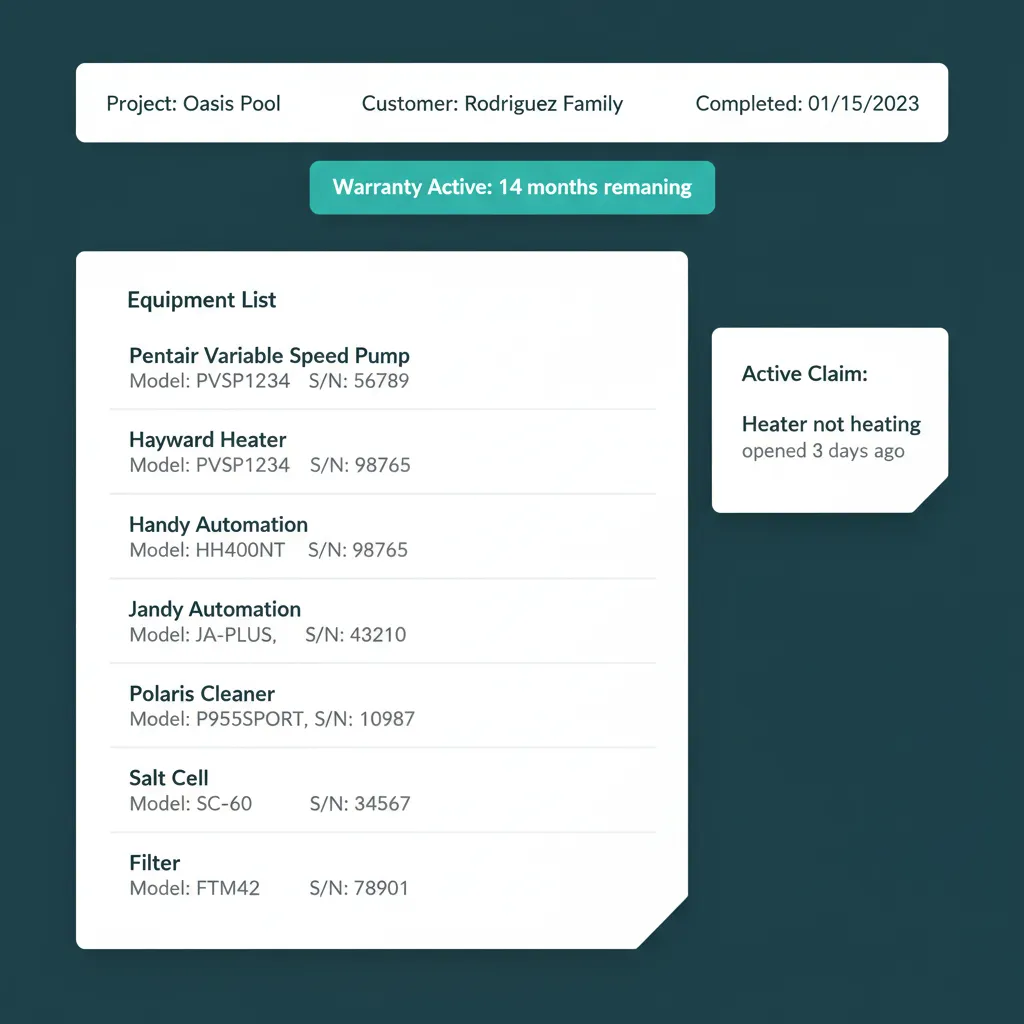
A customer paid you $90,000 nine months ago. They were happy at handoff. They almost left a five-star review. Today, the heater shut down and the pool is at 64 degrees. They call your office. The person who answers does not know who built the pool, what heater was installed, or when. They take a message. Three days later, your PM calls back, asks the customer to read the model number off the heater, and starts the warranty process from scratch. This is what happens without construction warranty management software in place.
That phone call decided whether this customer ever refers you. They will refer you if you handle this fast and right. They will not if it takes a week to find the install date. Most pool builders lose this moment because they treat warranty as a separate workflow that happens off the platform, usually in someone's email and a folder of physical paperwork.
Pool construction sells on referrals. Referrals are won at handoff and held during warranty. Lose the warranty, lose the referrals.
Equipment Registries, and a Resolution Funnel That Documents Everything. A Dedicated Warranty Phase,
When a project closes Punch Outs in WFP, it does not disappear. It moves into a Warranty phase that lives for the duration of every applicable warranty term. The project's full history stays one click away, every piece of equipment is registered, and every claim has a tracked resolution path.
Dedicated Warranty Phase Per Project
Projects do not exit the system at handoff. The Warranty phase tracks the warranty start date, the duration of each applicable warranty (workmanship, manufacturer equipment), and surfaces the project to the team if a claim comes in months or years later. Residential construction warranty tracking lives where the rest of the project history lives, not in a side folder.
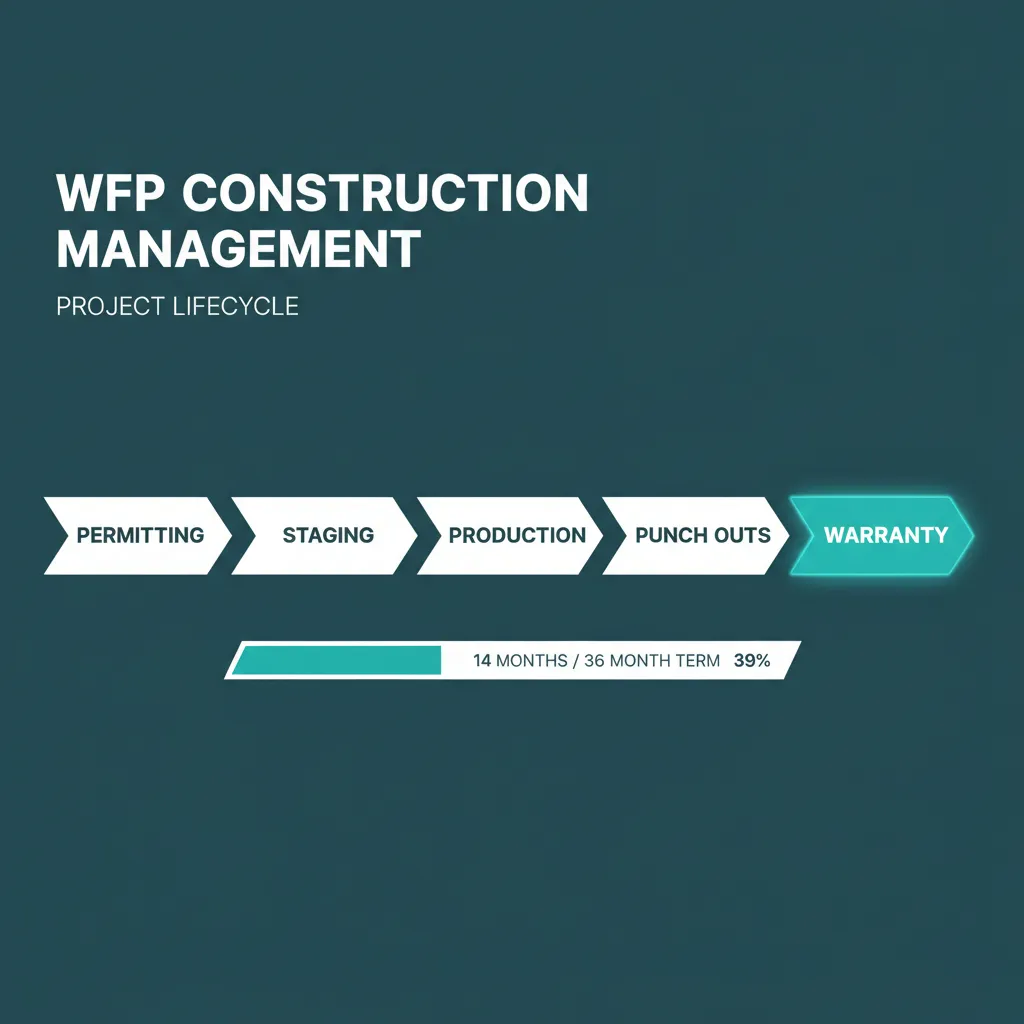
The warranty phase is a phase, not a footnote.
Equipment Registry
Every piece of installed equipment is logged: manufacturer (Pentair, Hayward, Jandy, Polaris), model number, serial number, install date, registered warranty term, and a link to the manufacturer's warranty portal. When a claim comes in, the rep does not ask the customer to read numbers off a pump motor. The numbers are already there. Equipment warranty tracking construction operations need is not a spreadsheet, it is a registry.
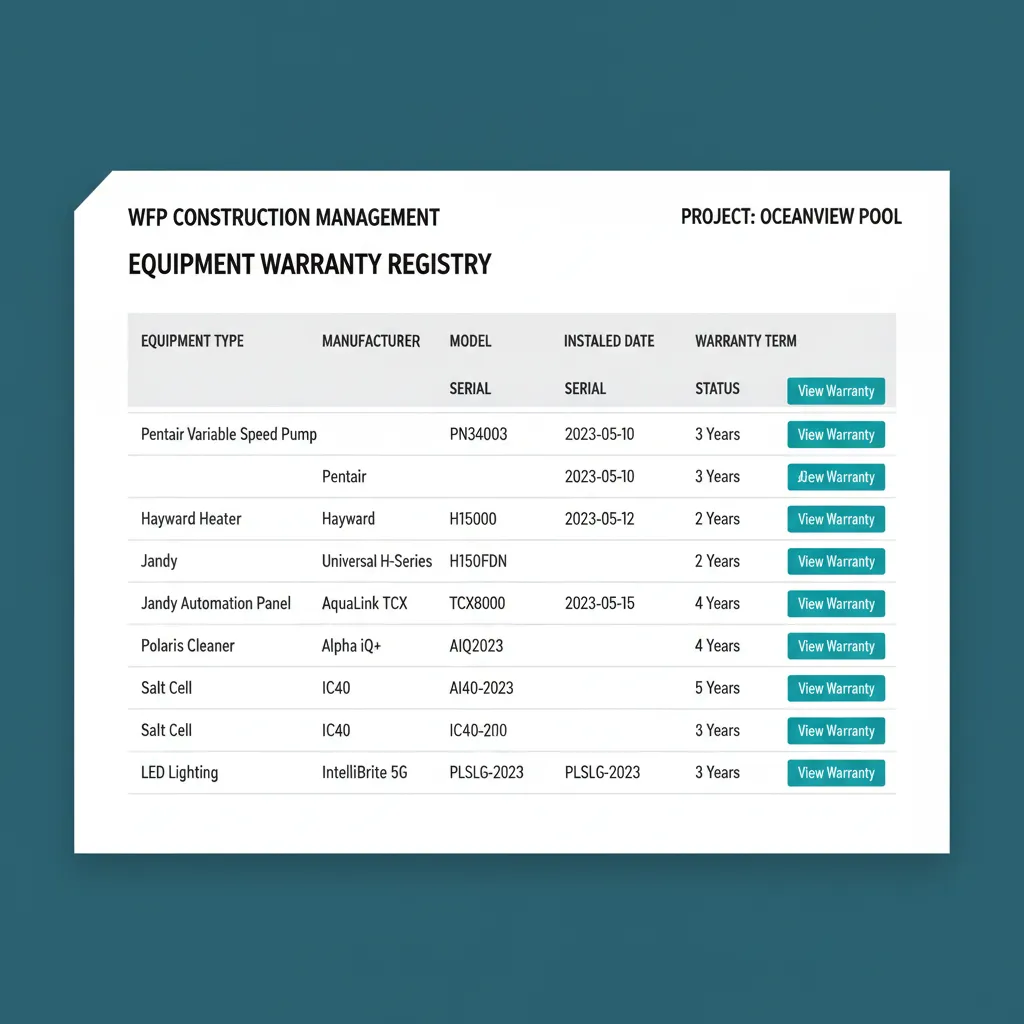
Every pump, every heater, every salt cell. Logged at install, ready at claim.
Claim Funnel With Documented Resolution
Warranty claims open as their own work items inside the project. Each claim has: customer-reported issue, equipment involved, photos, technician dispatched, manufacturer claim number, status (Open, In Progress, Awaiting Parts, Resolved), and resolution notes. Every interaction is documented. What warranty claim management construction teams keep getting wrong now becomes a workflow that simply moves.
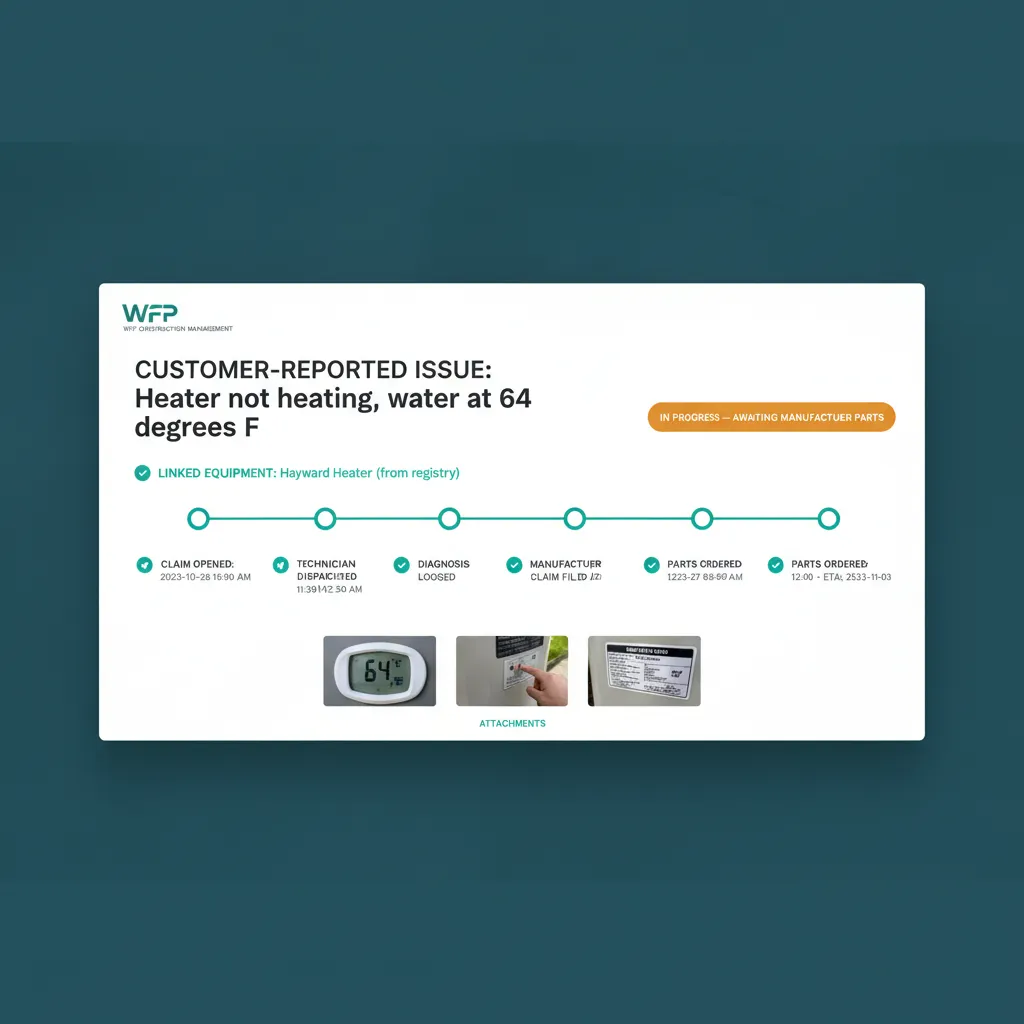
Every step of the claim, on one screen, with a timestamped record.
Customer-Facing Visibility
When enabled, customers see the status of their claim in the same portal they used during the build. They know it was received, they know who is on it, and they know the next step. Customers calling for status drops to near zero, and the calm confidence shows up in your reviews.
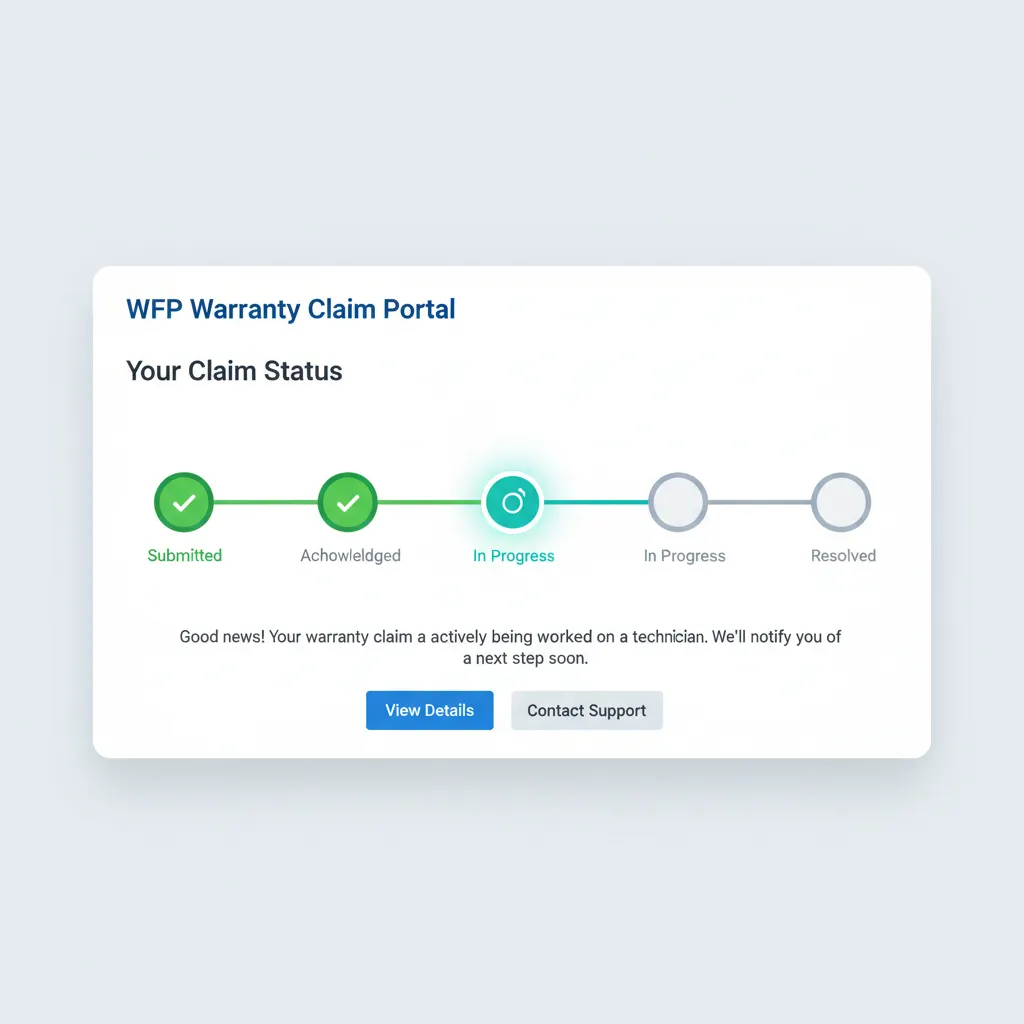
They see what is happening. So they stop calling to ask.
WHAT MOST PLATFORMS DROP
Most Tools End at Handoff. That's Where the Referrals Begin.
When you look at a Buildertrend project after completion, it is closed. When you look at a Procore project after completion, it is archived. The customer is gone from the dashboard. The equipment list, if it ever existed in the system, is buried in a documents folder. The next time anything happens with this customer, the team starts from scratch.
WFP refuses that handoff. The project lives. The equipment is registered. The customer is still in the portal. When the heater fails 8 months later, your team opens one screen and sees the install date, the model number, the manufacturer's warranty terms, and a button to file the claim with Pentair directly. The fast response is not heroic, it is the default.
Why we built this
Every happy customer is the next happy customer's referral. Warranty is where you keep them.
BATTLE-TESTED
Five-star reviews became the norm.
Inside the construction company where WFP was built, warranty was treated as a referral generator, not a cost center. Every claim was handled fast because the equipment data, the customer history, and the project notes were all in one place. The result was a steady stream of referrals from customers who had needed warranty service and walked away more impressed than they were at handoff. Pool warranty management software, done well, is the moment your reputation compounds.
Common Questions About Warranty Management
Each claim is its own work item inside the project's Warranty phase. The claim records the issue reported by the customer, the equipment involved, photos, the technician dispatched, the manufacturer's claim number when applicable, and the full resolution timeline. Nothing lives in email.
Yes. Every installed item, pumps, heaters, automation panels, salt cells, lighting, carries its own warranty record with manufacturer, model number, serial number, install date, and warranty term. When a heater fails, the heater's warranty record is one click away.
Yes. The customer portal supports warranty claim submission with description, photos, and timestamped acknowledgment. The claim opens automatically inside the project's Warranty phase and the team is notified.
As long as you configure. Workmanship warranties typically run 1 to 3 years. Equipment warranties vary by manufacturer, most pool equipment is 1 to 3 years, with some structural elements longer. The Warranty phase stays active for the longest applicable term per project.
Manufacturer claim numbers, dates filed, and status updates can be logged on each claim. Direct API integrations vary by manufacturer. The platform consolidates the human and document workflow regardless of who is on the other end of the manufacturer call.
Files remain accessible in the project archive even after the Warranty phase closes. Audit-ready, accessible within minutes if a legal or insurance situation arises later. You do not lose the history when the term ends.
Related Features
Customer Communication
Automated SMS updates, customer portal, and the messaging that drives referrals.
Project Management
Phase-based lifecycle that includes Warranty as a first-class phase.
Reporting
Warranty claim reports, equipment failure analysis, manufacturer reliability data.
See Warranty Management in Action.
Bring a real claim that came in last year and we will show you how WFP would have handled it from the first phone call to the manufacturer reimbursement.
Schedule a DemoNo 6-month onboarding commitment. No per-seat pricing. Just a conversation about how your operation could run.